
Aug 28, 2026Industry Insights
7 Checks Before Custom Furniture Production in Saudi Projects
Seven practical checks for Saudi fit-out teams before custom furniture production, covering dimensions, finishes, power, installation and packing.

A render can show the intended look of a reception desk, meeting table or wall unit. It cannot tell the factory everything needed to build it. This gap is where many custom furniture problems begin.
For Saudi fit-out projects, the safest time to solve these issues is before material ordering and cutting. Once production has started, even a small change to a power module, veneer direction or joint position can affect several items.
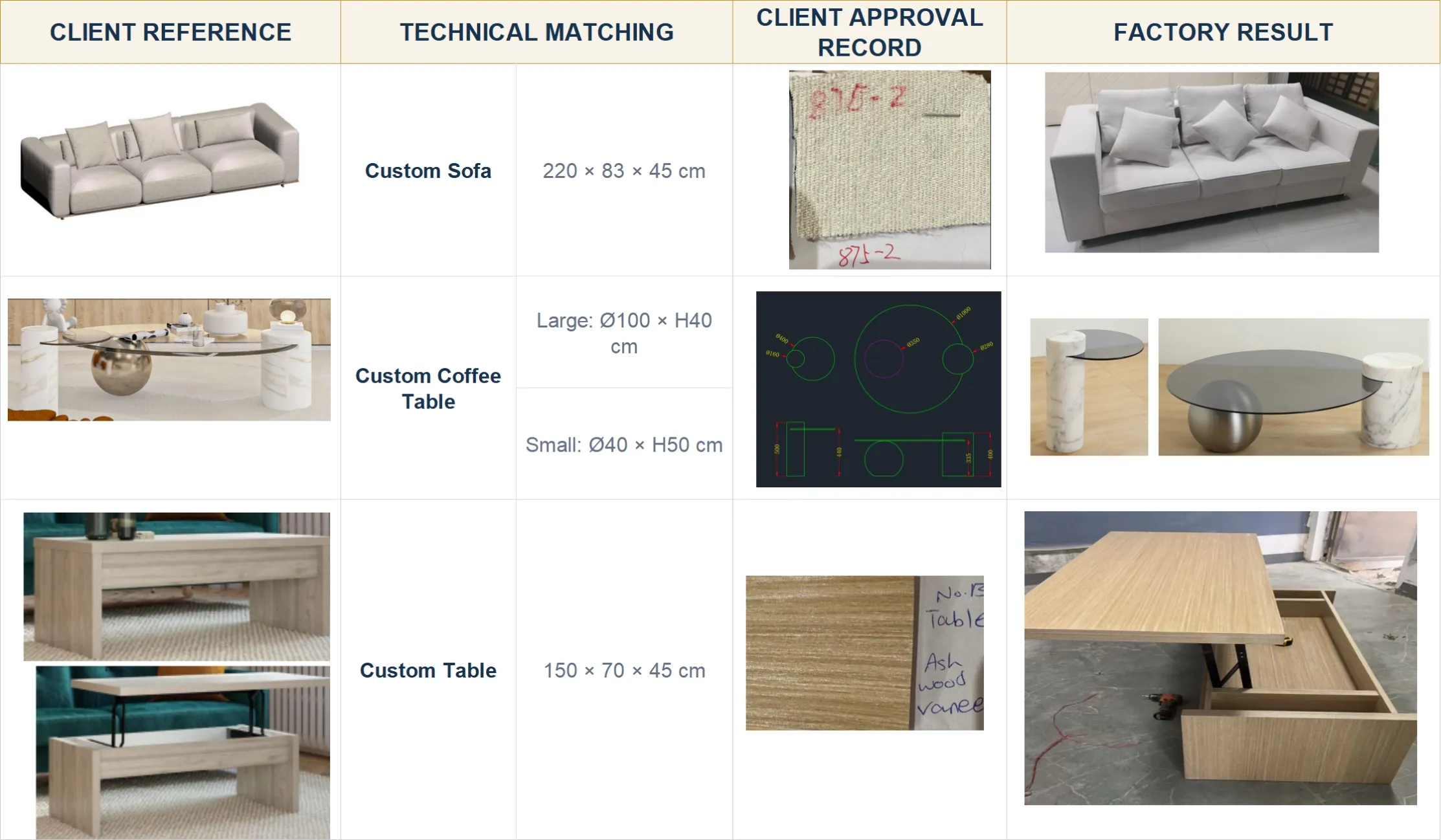
Use final dimensions, not dimensions taken from the render
Perspective images are useful for understanding proportion, but they are not production drawings. We normally check the furniture plan, elevations and site dimensions together. A wall-to-wall cabinet, for example, needs allowances for skirting, uneven walls and installation access. If the site measurement is still pending, that item should remain clearly marked instead of being released with an assumed size.
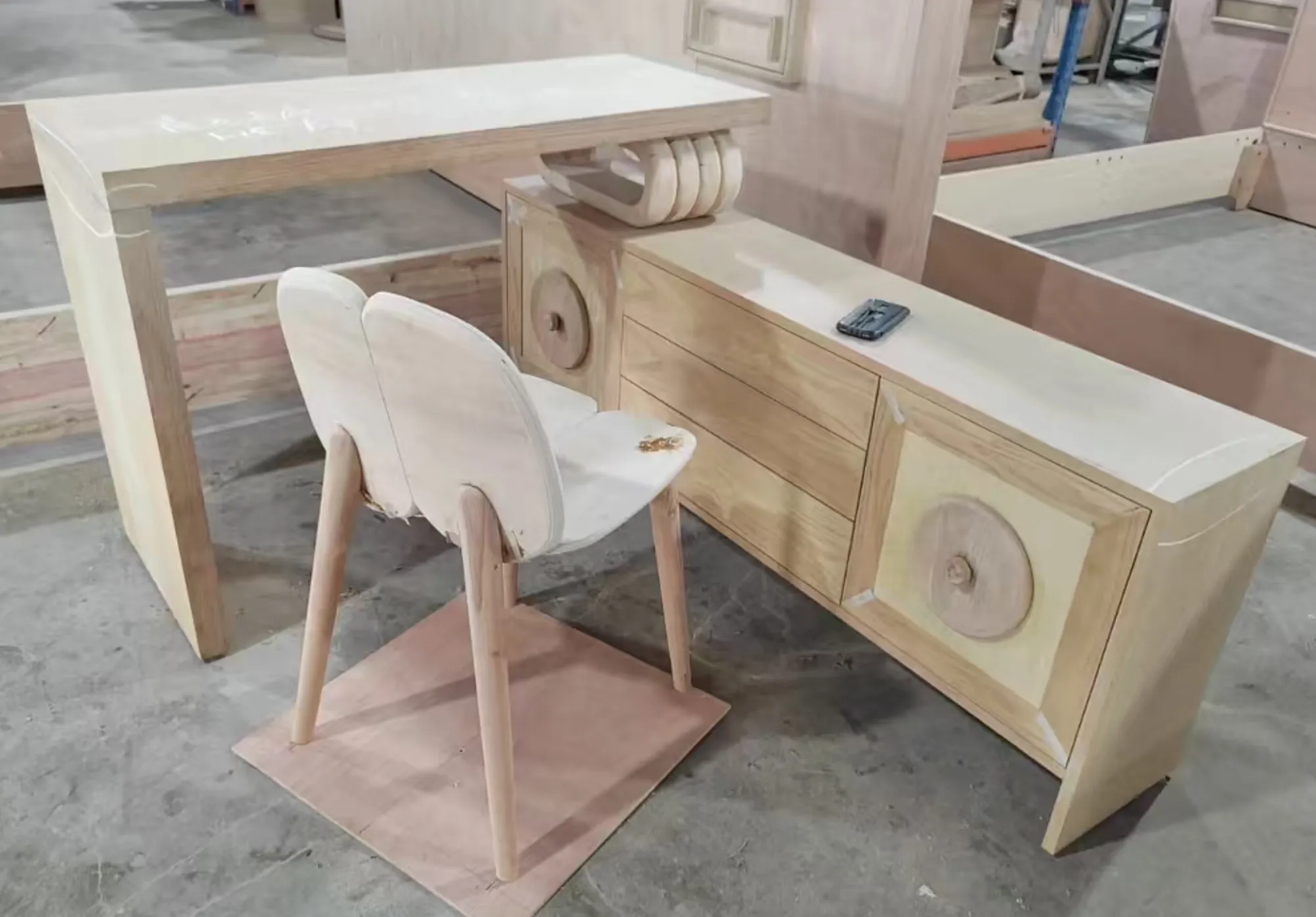
Define the visible finish with a physical reference
Descriptions such as walnut, brushed gold or beige stone are too broad for final approval. The same name can cover many colors and textures. The approval should identify the exact laminate or veneer reference, metal color and gloss level, stone pattern, upholstery and edge detail.
For items that will stand next to each other, we also check veneer grain direction and how the pattern continues across doors or panels. A sample board is usually more useful than a long discussion based on phone photos.
Check how the item will enter the building
A large table or feature cabinet may be easy to assemble in a factory but impossible to move through the site entrance, lift or corridor. Before fixing the structure, we need the door and lift dimensions, the largest acceptable package size and the installation route.
When necessary, the item can be divided into controlled sections. The connection points should be designed before production so they remain strong and are not visible after assembly.
Confirm power and cable requirements before making cut-outs
Meeting tables, executive desks and workstations often include socket boxes, cable trays and access panels. The power module model and cut-out size must be confirmed early. Changing the module after the top panel has been made may leave an unusable opening or require a new panel.
We also check where cables enter the furniture and how they reach the floor box or wall outlet. A neat product photo means little if the installer has to drill new holes on site.
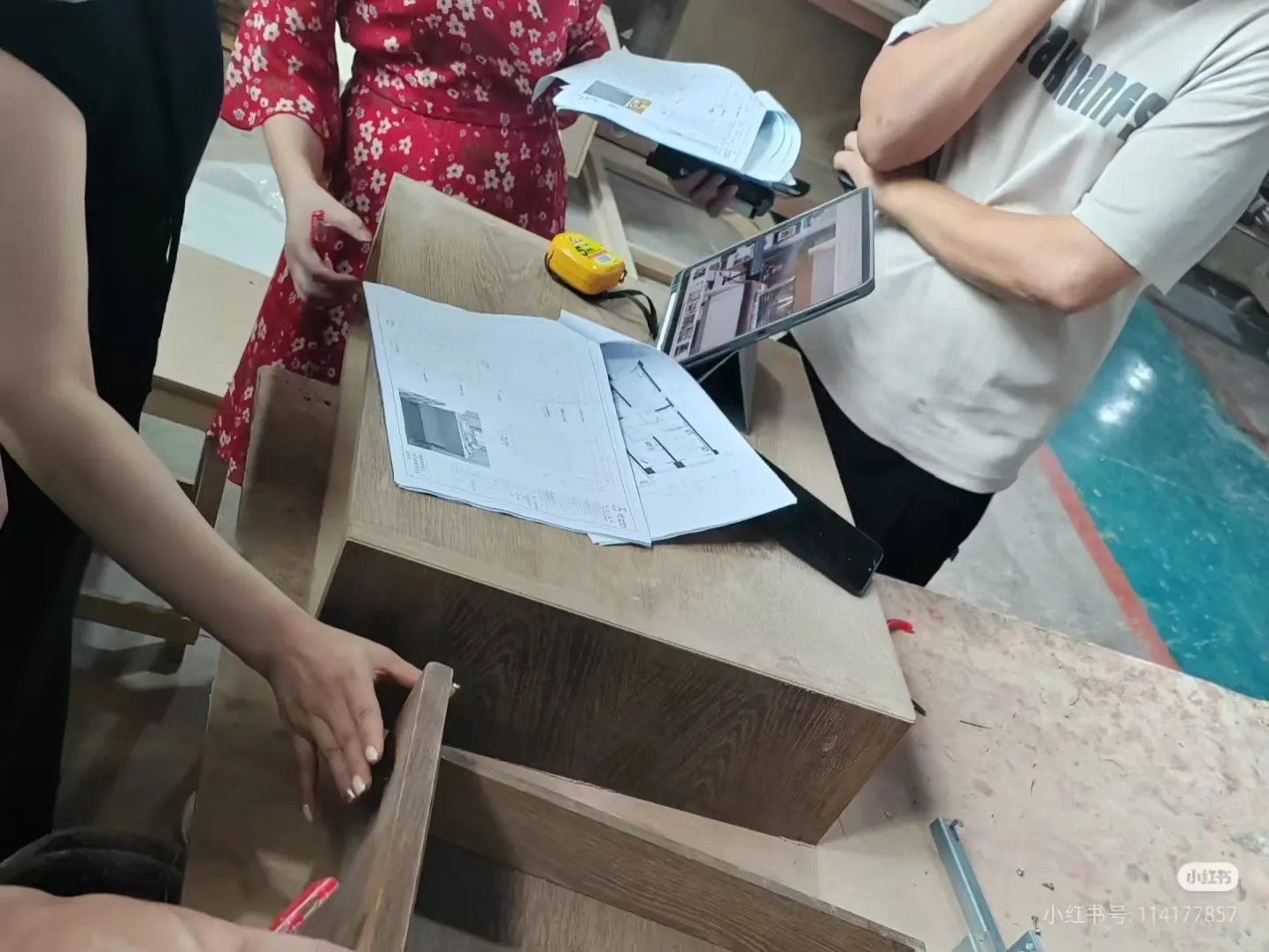
Decide what should be pre-assembled
Pre-assembly is not required for every standard chair or cabinet. It is valuable for custom metal frames, curved counters, large tables and items with several connected parts. A factory trial assembly allows us to check alignment, stability and missing hardware while corrections are still practical.
After the trial, components can be numbered and photographed before packing. This gives the site team a much clearer installation reference.
Freeze the correct BOQ and drawing revision
Projects change. The problem is not the change itself; it is having different teams working from different versions. Before production, the BOQ, approved drawings and finish schedule should carry a clear revision or approval date.
If one item is revised, its quantity, drawing, specification and price need to be checked together. Updating only the drawing is not enough.
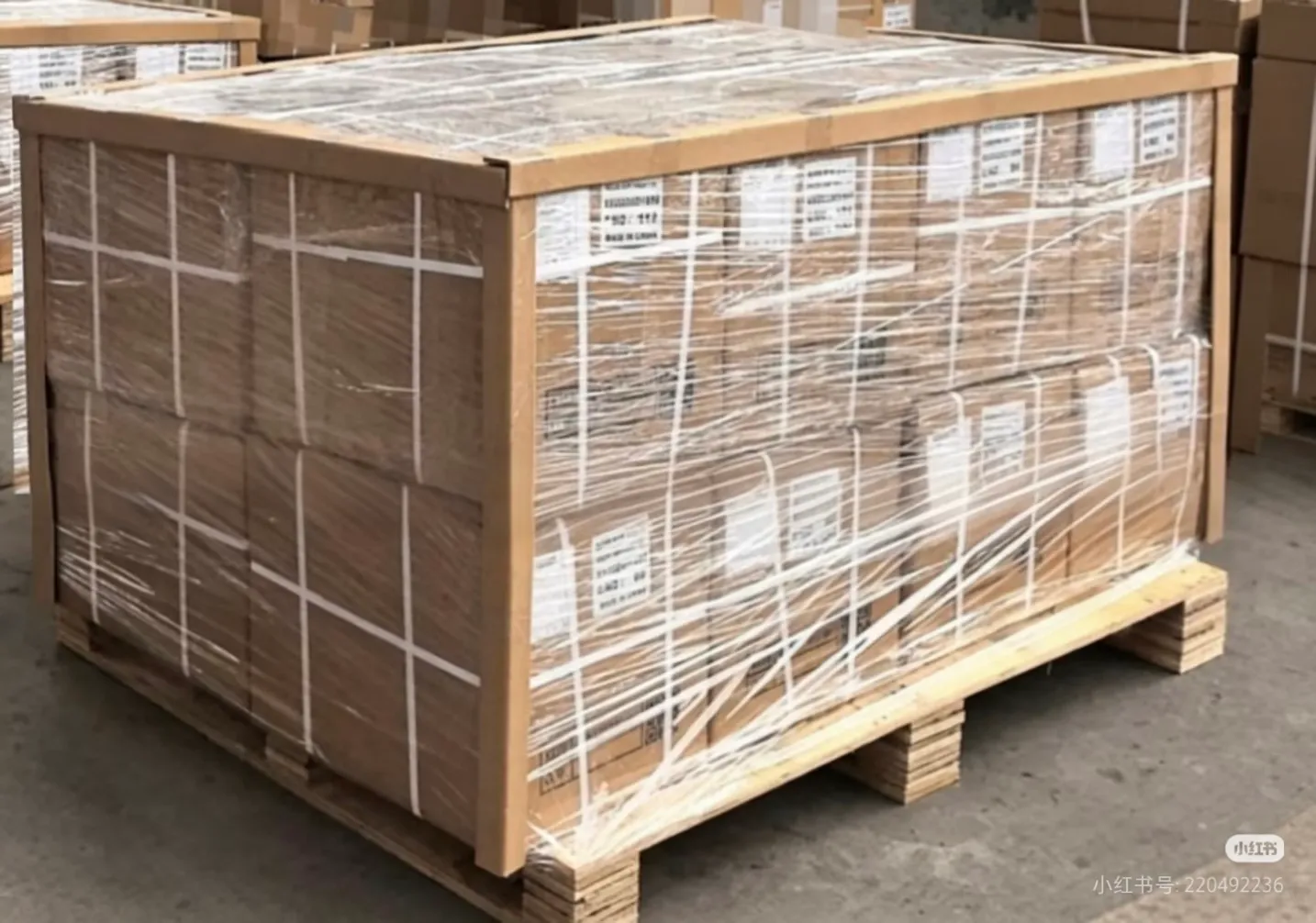
Plan packing around the installation sequence
Packing should protect the furniture, but it should also help the receiving team identify it. We prefer labels that connect each package to the item code, room or floor and package number. Hardware should be packed with the correct item or clearly cross-referenced.
For multi-area projects, random loading creates extra work at the destination. A simple loading and labeling plan can reduce searching, repeated handling and lost fittings.
What we need before a workable quotation
A quotation becomes more reliable when it is based on the same information that production will use. For an initial review, the following is usually enough:
Furniture layout and relevant elevations
BOQ with quantities and item codes
Reference images or design renders
Known dimensions and site restrictions
Material or finish direction
Required delivery schedule
Not every detail needs to be final on day one. Unconfirmed points should simply be listed as assumptions or pending decisions. That is more honest, and more useful, than hiding uncertainty inside a fixed price.
A practical way to start
For a Saudi office, commercial space or villa project, we can first review the drawings and furniture list, then identify the items that need clarification before quotation. This early check does not make the design more complicated. It prevents production from being based on guesses.